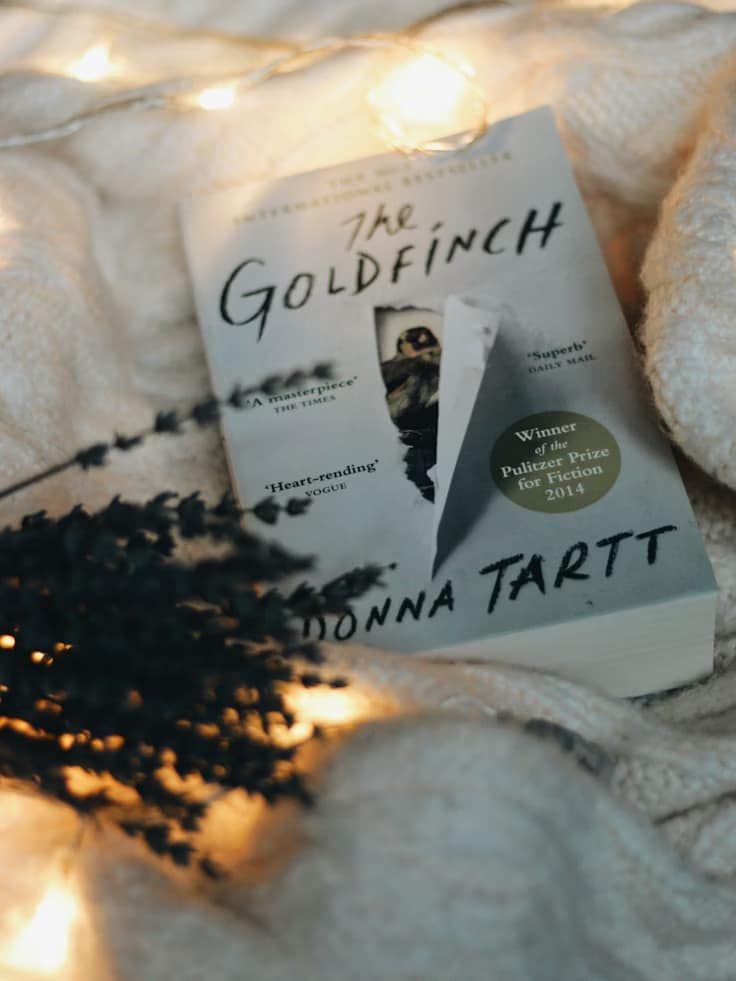
Warning: This review contains heavy spoilers for both the book and movie versions of “The Goldfinch.” This review also contains mentions of heavy themes and adult content.
Donna Tartt’s The Goldfinch is a remarkable coming-of-age novel that deals with both loss and love in all its forms in a beautiful way. The book follows the story of a young man named Theodore Decker, beginning with the day his mother is killed in a museum bombing. This book grapples with heavy themes such as drug use, child abuse, and gang violence, all while painting the world through a deeply philosophical lens.
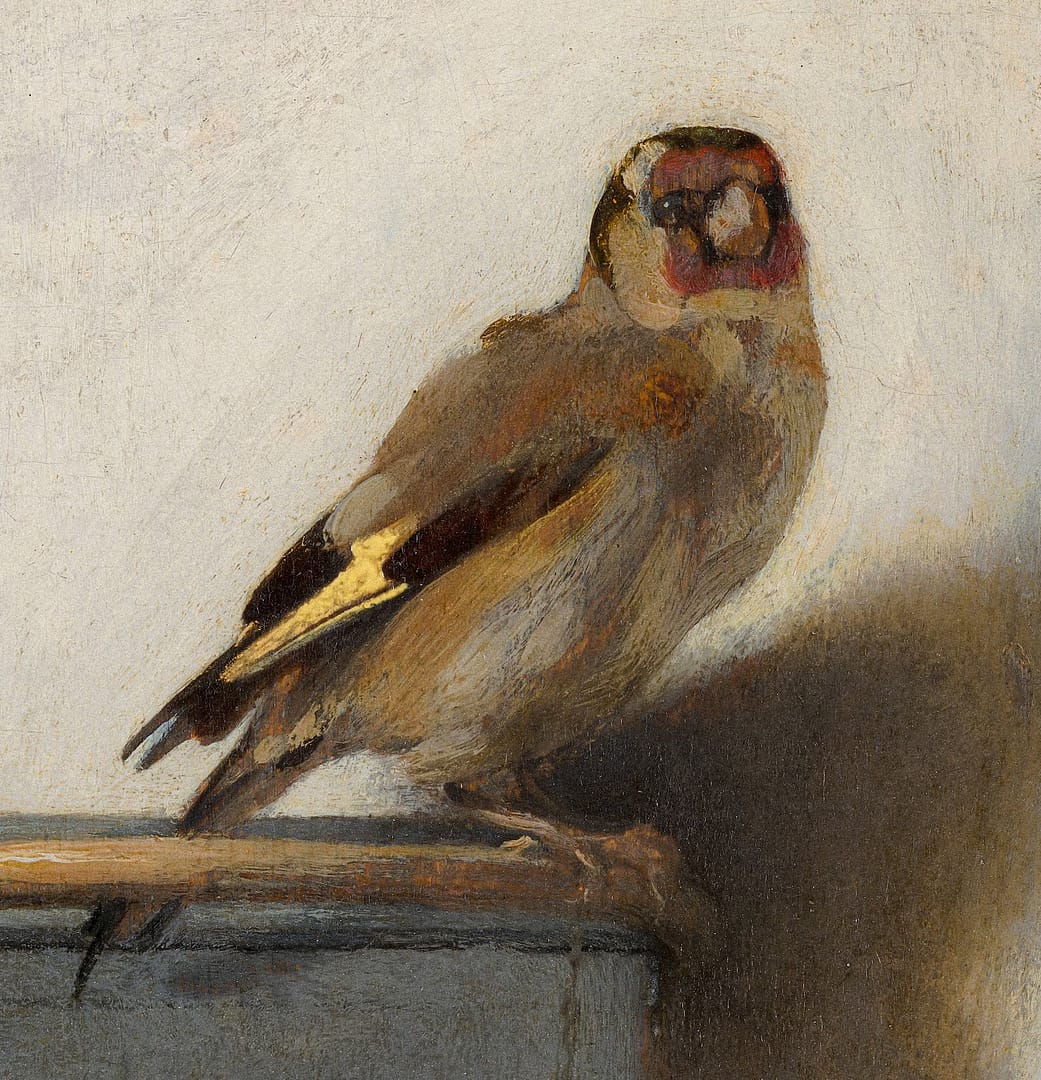
The book begins with Theo and his mother visiting the Metropolitan Museum of Art in New York City. Theo, a thirteen-year-old New York native and former star student, has been summoned along with his mother to a conference with his school’s principal. Theo and his friend had been caught with cigarettes, the latest in a long string of behavior incidents following the complete disappearance of Theo’s father. Theo’s mother, a former model who had nearly completed her degree in art history, decided to use the free morning before the conference as an opportunity to visit one of her favorite museums. However, a seemingly innocuous morning turned disastrous when Theo and his mother found themselves caught in the midst of a terrorist attack on the Met. In the chaos and confusion, and heavily influenced by a severe concussion, Theo happens to shove an incredibly valuable painting in his bag. This painting happened to be The Goldfinch by Carel Fabritius, a famous painting treasured for its historic background.
Theo returns to their apartment alone, only to later learn that his mother did not survive the explosion. From there, he experiences a whirlwind of child protective agents and social services attempting to find a placement for him, as well as detectives and police officers questioning him about what he may have noticed about the bombing. Theo ends up living with his childhood friend Andy Barbour, whose family is notably wealthy. After a lengthy adjustment period, Theo finds himself enjoying his stay at the Barbours, and even hoping they’d end up adopting him, a possibility that seems to grow more likely by the day. Everything changes, however, when Theo receives a shocking visit from his estranged father and his father’s new girlfriend Xandra. Theo’s father, Larry Decker, announces he will be taking Theo back to live with him in Las Vegas.
Theo moves to the Las Vegas suburbs with Xandra and Larry, immediately hating it there. He knows no one and feels extraordinarily out of place in the near-empty desert. His perspective shifts once he meets a strange Ukrainian boy named Boris Volodymyrovych Pavlikovsky. Boris and Theo become fast friends, both outcasts in their own ways. Boris provides Theo with alcohol and drugs, as well as teaching him how to shoplift. In return, Theo let Boris play with Popper, Xandra’s dog. The two’s relationship is certainly not entirely platonic, with Theo stating at one point that their bond is something that cannot be defined. They share everything, from clothes, food, and money, to punches and their deepest secrets. Their relationship comes to a head one night when Theo learns of his father’s death in a car accident. Terrified of Xandra sending him away, he immediately begins packing to leave. Boris begs him not to leave yet, to wait just a bit longer. Theo insists that he can’t, that it must be tonight. Before Theo gets into the taxicab awaiting him, Boris kisses him. Theo still goes back to New York, but he does think to himself how he wishes he had told Boris then that he loved him.
Theo goes to live with an antique furniture repairman named Hobie, with whom he had formed a close bond while he was still living with the Barbours. Hobie takes him under his wing, and, after an 8-year jump, we learn that Theo has taken on the business side of Hobie’s furniture store. Theo, while certainly very successful, has seemingly dabbled in some shady business dealings including phony antique sales, all without Hobie’s knowledge. We begin to see the unraveling of the seemingly perfect life Theo has built for himself. He uses drugs such as cocaine regularly, and his relationship with his fiancée, the late Andy Barbour’s sister Kitsy, is extremely precarious. Theo is also being blackmailed by a former client whom he sold a fake chest to, a man by the name of Lucius Reeves. Reeves happens to be the first person to openly discover that Theo may be in possession of one of the famous paintings that disappeared during the Met bombing. He uses this theory as well as the phony $10,000 chest as a method to attempt to blackmail Theo, wishing for Theo to sell the painting to him.
Theo is, understandably, thoroughly upset over the whole business with Reeves. He attempts to use drugs to cope but realizes he’s out. While attempting to buy more, he runs into none other than Boris Pavlikovsky. The two spend most of the rest of the night catching up with each other, until Boris admits something that had been bringing him guilt ever since Theo had left for New York. As it turns out, the painting was not safe in Theo’s possession as he had believed. In fact, Boris had used it as collateral on a drug deal that went badly, causing the painting to be stolen. When Theo learns this, he jumps out of Boris’s limousine, sprinting to the storage facility where he believed he was keeping the painting. When he opens the packaging, however, all he finds is an old textbook.
Boris eventually tracks down Theo, and together, they set off to Amsterdam to find the man who stole the painting. In their initial recovery attempt, Boris is shot, Theo kills a man, and the painting is still lost. Boris and Theo part ways temporarily while Boris attempts to track down the painting’s current whereabouts, leaving Theo to wait alone in his hotel room for several weeks. Theo ends up spiraling severely, writing goodbye messages to everyone he knows before attempting to end his life. Thankfully, he is unsuccessful (in the book, he simply survives, while in the movie adaptation, Boris finds and saves him). Shortly afterwards, he is reunited with Boris, who reveals to him the most recent events regarding the painting. Boris had managed to plant incriminating evidence regarding the art thief, and, with a strategically placed phone call, The Goldfinch and many other stolen works of art were returned to museums across the world.
The Goldfinch is certainly not an easy read, both due to the heavy emotional themes as well as the sheer length of the book. However, I personally find it absolutely worth the trouble. By the end of the book, Theo finds himself grappling with the concept of life itself and its meaning. Every relationship in his life has gone through some sort of fundamental change, including his relationship with himself. I find that, despite Theo and I living extremely different lives, he makes for a rather relatable main character. He feels painfully human and wonderfully flawed, along with many of the other characters in the book. I really like the “ugliness” that the book puts on full display, how none of the characters or relationships are perfect, save for Theo’s near idolization of his late mother. I also adored Theo’s philosophical ponderings, especially at the end of the book. We learn what life means to Theo, and what he wants out of it. We also watch him grow and change throughout the book, and yet he still maintains realistic, human flaws by the end.

I previously, albeit briefly, mentioned The Goldfinch’s movie adaptation. While this is a book review, I wanted to include some of my thoughts on the movie as well. I watched the movie before I realized there was a book to read, and at first, I really enjoyed it. I still think it isn’t a terrible movie, but it’s not great, either. The pacing of the movie feels choppy and hard to follow, and the premise feels almost like a mystery of sorts rather than a book about human relationships. A major part of the book’s appeal comes from Theo’s inner monologues, providing details, emotions, and opinions that are otherwise missing from the movie. Overall, the movie lacks the emotional depth and appeal that serves as the main purpose of the book, as well as falling flat in terms of relationship development, which was another key feature of the original book. Overall, while the book version of The Goldfinch is a stellar read that dives into human experience and the meaning of life, the movie adaptation seems to fall flat, being hard to follow and lacking in emotional depth. I can’t wait to start on my next Donna Tartt read, “The Secret History!”
Edited and Reviewed by Rebecca Price
