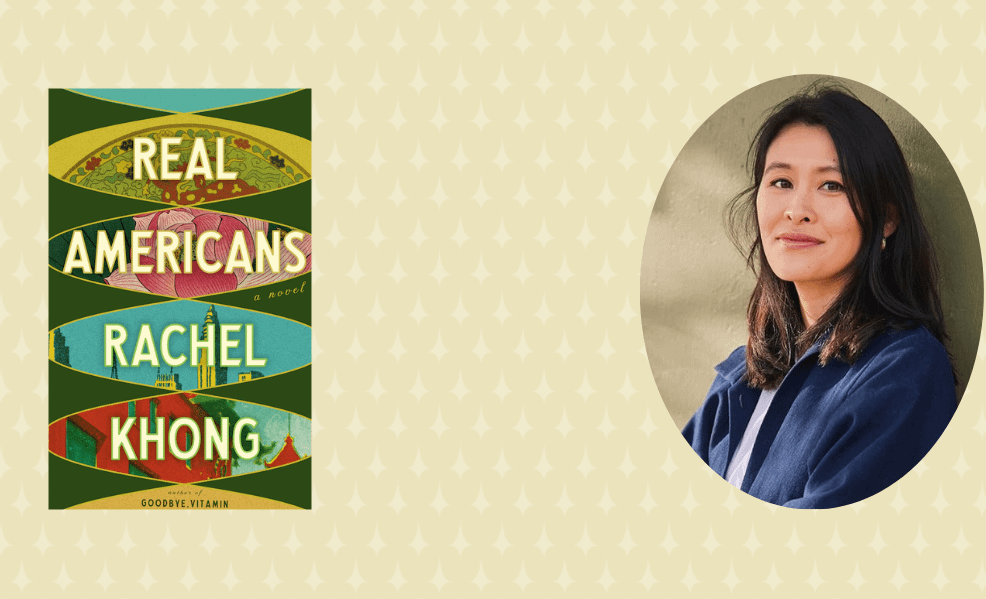
Real Americans is a fiction novel that explores themes of generational family conflict, love’s ability to withstand broken trust, fortune, and self-identity. Written by Los Angeles-based author Rachel Khong, the book is divided into 3 larger parts, each with its own chapters exploring different characters. The three Chinese American characters the book zooms in on are Lily, her son Nick, and her mother, Mei. The stories of these three generations intertwine in complex and poignant ways. Throughout the book, this family grapples with their identities and choices as they experience the competing forces of the generations before and after them. Beautifully written, Khong found a balance between plot and concept, which both snuck up at various points throughout the read.
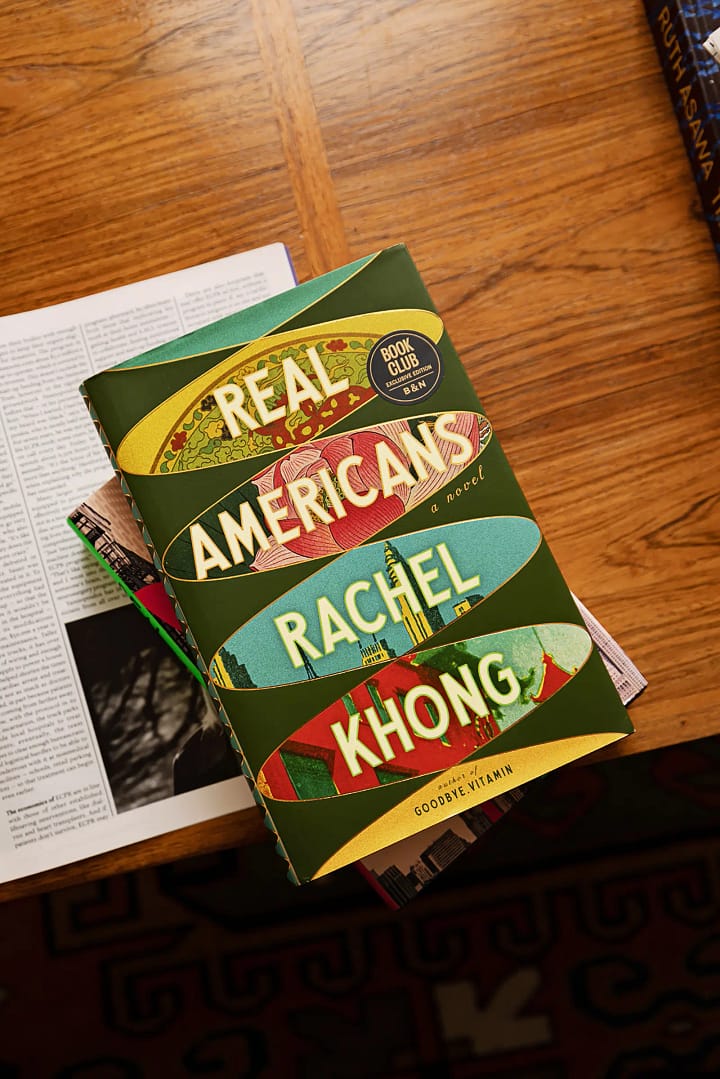
Part one begins in 1999, New York City, with Lily Chen, an art history graduate working as a media company intern. This first section of the novel explores Lily and the complexities that she doesn’t even completely understand. She meets Matthew, a wealthy white man, at a holiday party, and a relationship blossoms. They swiftly get married and are eager to start a family. Lily’s parents, both scientists, seem to disapprove of Lily’s settling down as they want more for her, but Lily is happy with the life she lives and is constantly making peace with the fact that it is her choice to make. Their son Nico, conceived via IVF, is born with blue eyes, blonde hair, and no Chinese features. This feeds into Lily’s disconnection from her Chinese heritage, but in her approach to motherhood, she promises herself to be more openly loving and connected to her son than her mother was to her. Lily’s section in the book seemed to be simple plot points leading to the next, until the very end. Lily attempts to find some connection to her heritage by visiting one of her mother’s old friends, Ping. It is here that she makes shocking discoveries about her parents and their connection to Matthew’s parents.
Part two begins twenty years later, in 2021, and follows Lily’s 15-year-old son, Nico, who has chosen to go by Nick. A single parent now, Lily has created a new life for herself and Nick. They are now living alone in an island community off the coast of Washington, where he and his best (and only) friend Timothy dream of escaping to college on the East Coast. Lily has become somewhat of a helicopter parent, but it is evident that she loves her son and basically lives for him. Nick commonly expresses a feeling of not knowing who he is outside of the shell his mother kept him in his whole life, parallel to how Lily also struggled to know herself during her own coming of age. Nick questions his heritage and yearns for information about his family before him, so much so that he takes a DNA test to find it. Through this, he meets his father, Matthew, who Lily was previously keeping him from. This section of the book was by far my favorite, as it explored Nick navigating his teenage and young adult life while feeling a pull from not only his mother, but also the family that he hardly knew he had.
The final part is narrated mostly by Lily’s mother, Mei, who begins the section speaking of her old age and frail physicality. She spends her days watching her grandson, Nick, who had previously been convinced by his mother that Mei died long ago. Eventually, the two meet and slowly form a friendship where Mei reveals her past to him. She begins her story at the beginning of her life in China and explains what it was like to grow up during the Cultural Revolution led by Mao Zedong. She tells her story of studying science at Peking University, where she fell in love with her friend Ping. She dreams of running away to the U.S with him to become scientists; only part of that dream came true. She made it to the U.S with another man, her future husband Charles, who she became a genetic scientist with instead. Nick then learns why his mother took him from her, and furthermore, why she took him from Matthew. Mei’s story poses the complexities of Lily and Nick’s lives.
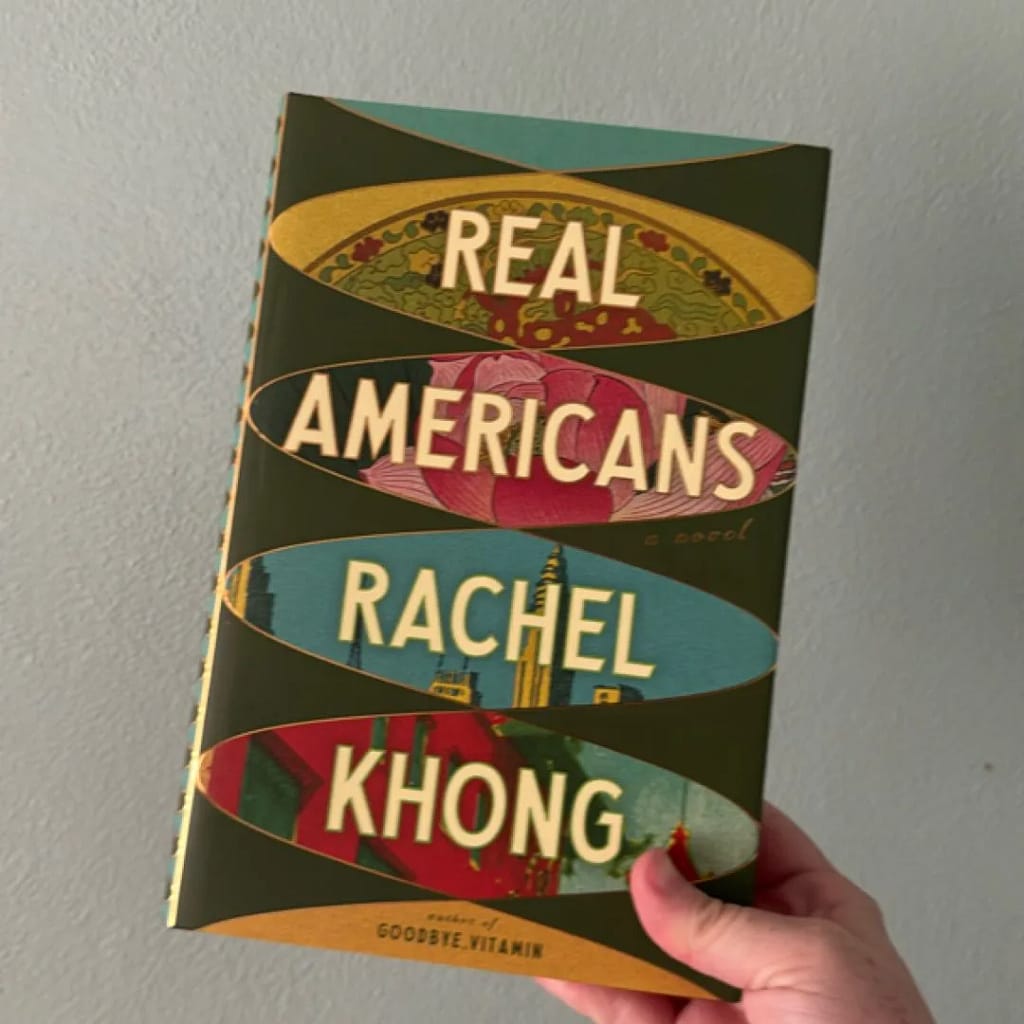
This book delivered on many of its promises but also offered some unexpected themes. The prominent idea of the plot was the generational tension between the 3 main characters, which Rachel Khong executed brilliantly. To write a novel that covers 3 generations is hard enough, but to do it to where the storylines don’t make seamless ties but still intertwine enough to make sense –– that is beautiful. The ways each character approached the love, trust, and hurt of their own lives were entangled with the generational impact that each one had on one another. Another concept the book presented, especially in the latter parts of the read, was choice. Mei’s philosophies on some traits being more favorable or luckier than others posed the question of whether the possibility to choose these traits through genetic engineering was ethical or not. Lily and Nick’s stories were a critique of this idea, as they constantly had to cope with the unknowns that persisted throughout their lives. Khong’s ability to create comprehensible scientific dialogue throughout the plot was important, as the scientific elements were what pushed the story along. Another element of the novel that stood out to me was Khong’s ability to paint a pristine picture of each timeline. Lily’s section emanated the feel of Y2K in New York City just as well as Mei’s story about 1960’s China read like historical fiction. Overall, the structure, plot, and concepts of the book were deeply complex and emotional. It tended to feel uneven at times because of the sheer number of concepts it presented, but I think that is meant to reflect the way the characters felt. While it sometimes felt difficult to pick out the beginnings and ends of the storylines, I think the ending concludes the conversation very well. When Mei is lying in bed sick with her grandson Nick, who has made the choice to take care of her, Lily decides against her better judgment to go see her. Lily could have chosen to leave Mei with unknowns about whether there was still a relationship between them, the way Mei left her with unknowns in her life, but she didn’t. While nothing was truly tied together in the ending, in a way, Lily, Nick, and Mei simply being in the same room resolved the tension felt between them throughout the story.
Edited and Reviewed by Zoe Carter
